Caffè della VerGOGNA – edizione del 27 Settembre 2026
Nell’ultima riunione sulla Legge di Bilancio è esploso uno scontro duro dentro la maggioranza sul cosiddetto Superbonus Energia, la proposta di rimodulare gli incentivi alla transizione verde delle imprese per dirottare risorse sul taglio del cuneo fiscale. Le associazioni di categoria hanno reagito con durezza, le opposizioni hanno gridato al tradimento della transizione ecologica, e il governo, ancora una volta, si trova a dover scegliere tra il rigore dei conti e le promesse della campagna elettorale. La coperta è corta, i desideri sono tanti, e ogni decisione produce una protesta, come se la politica fosse un gioco a somma zero dove nessuno può vincere davvero.
A New York, a margine dei lavori conclusivi dell’Assemblea Generale dell’Onu, la delegazione commerciale europea ha espresso forte preoccupazione per le minacce di nuovi dazi statunitensi sui prodotti tipici comunitari. Il settore vinicolo e lattiero-caseario italiano resta in stato di allerta, e i produttori guardano ai prossimi negoziati bilaterali con il fiato sospeso. Un bicchiere di vino, che è il simbolo di una civiltà contadina costruita in duemila anni, rischia di diventare merce di scambio in una partita che si gioca a colpi di tweet e di minacce, e l’Italia, ancora una volta, scopre che le sue eccellenze sono fragili quando il tavolo è a Washington.
La nuova finestra per richiedere il Bonus Trasporti è durata meno di tre ore. La piattaforma ministeriale è andata in tilt pochi minuti dopo l’apertura, i fondi allocati si sono esauriti in centottanta minuti, e centinaia di migliaia di pendolari sono rimasti a bocca asciutta. Le proteste dei consumatori si sono riaccese immediatamente, e la vicenda ha il sapore di una beffa: uno Stato che promette un aiuto concreto e poi non riesce nemmeno a far funzionare il sito che dovrebbe erogarlo. La burocrazia digitale, che doveva semplificare la vita, produce nuove attese e nuove delusioni, e il pendolare che resta fuori dai fondi si chiede, legittimamente, a cosa sia servito aspettare.
In Germania, un ladro è stato incastrato da un aspirapolvere robotico. Durante un colpo in una villa, l’uomo ha urtato e attivato involontariamente il dispositivo, che ha inviato una notifica d’emergenza allo smartphone del proprietario in vacanza con le immagini del volto dell’intruso in altissima definizione. La polizia è intervenuta, e il ladro ha scoperto che le macchine che ci aiutano a tenere le case pulite sono anche ottime sentinelle. La tecnologia, che prometteva di liberarci dalle fatiche domestiche, si è rivelata una guardia giurata instancabile, e il furbo che credeva di aver pianificato tutto è finito in manette per colpa di un elettrodomestico.
Negli Stati Uniti, un uomo arrestato per infrazioni stradali si è presentato alla cassa del tribunale per pagare una cauzione di cinquecento dollari con cinque grandi fusti pieni di monete da un centesimo. I funzionari si sono rifiutati di contare il contante a mano, e la vicenda è finita in un contenzioso legale sulla validità del corso legale della moneta. La provocazione, per quanto infantile, ha il merito di sollevare una questione seria: la legge dice che il centesimo è moneta corrente, ma la realtà dice che nessuno lo accetta quando diventa scomodo, e il confine tra il diritto e la prassi si rivela più fragile di quanto si creda.
In Sudamerica, un importante scalo aereo ha bloccato le operazioni di decollo per oltre tre ore perché un immenso sciame d’api si era insediato sul carrello di atterraggio di un Boeing pronto al decollo. La torre di controllo ha chiamato d’urgenza un’equipe di apicoltori, che ha rimosso gli insetti senza danneggiare il velivolo, e i passeggeri, che aspettavano di partire, hanno assistito a uno spettacolo che nessun manuale di sicurezza aveva previsto. Le api, che da anni muoiono a milioni per colpa dei pesticidi, hanno scelto un aereo come casa temporanea, e forse, nella loro inconsapevolezza, hanno voluto ricordarci che la natura non ha ancora smesso di far sentire la propria voce.
Il caffè della vergogna, stamattina, sa di vernice verde e di monete lucide, di notifiche digitali e di cera d’api. La maggioranza litiga sul Superbonus, l’Europa trema per i dazi, il Bonus Trasporti si esaurisce in tre ore, un ladro viene incastrato da un aspirapolvere, un uomo paga la cauzione in centesimi, e uno sciame d’api blocca un Boeing. Il mondo, oggi, non ha bisogno di inventare nulla: gli basta guardarsi intorno.
Primo Levi, Storie naturali, Einaudi, Torino, 1966
Italo Calvino, La speculazione edilizia, Einaudi, Torino, 1963
Zygmunt Bauman, Modernità liquida, Laterza, Roma-Bari, 2002
Michel Foucault, Sorvegliare e punire, Einaudi, Torino, 1976
Neil Postman, Divertirsi da morire, Marsilio, Venezia, 2002
Konrad Lorenz, L’anello di re Salomone, Adelphi, Milano, 1967
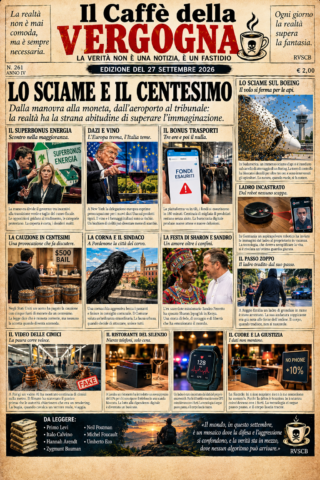
The Swarm and the Penny Caffè della VerGOGNA — September 27, 2026 Edition
During the last meeting on the Budget Law, a fierce clash erupted within the majority over the so-called Energy Superbonus, the proposal to reshape incentives for businesses’ green transition and redirect resources toward cutting the tax wedge. Trade associations reacted harshly, opposition parties cried foul at the betrayal of the ecological transition, and the government, once again, finds itself having to choose between fiscal discipline and campaign promises. The blanket is short, desires are many, and every decision produces a protest, as if politics were a zero-sum game where no one can truly win.
In New York, on the sidelines of the concluding work of the UN General Assembly, the European commercial delegation expressed strong concern over threats of new U.S. tariffs on typical Community products. The Italian wine and dairy sectors remain on alert, and producers look to upcoming bilateral negotiations with bated breath. A glass of wine, which is the symbol of a peasant civilization built over two thousand years, risks becoming a bargaining chip in a game played with tweets and threats, and Italy, once again, discovers that its excellence is fragile when the table is in Washington.
The new window to apply for the Transport Bonus lasted less than three hours. The ministerial platform crashed a few minutes after opening, allocated funds ran out in one hundred eighty minutes, and hundreds of thousands of commuters were left with empty pockets. Consumer protests reignited immediately, and the affair has the flavor of a mockery: a state that promises concrete help and then cannot even make the website that should deliver it function properly. Digital bureaucracy, which was supposed to simplify life, produces new waits and new disappointments, and the commuter left out of the funds legitimately wonders what waiting was for.
In Germany, a thief was caught by a robotic vacuum cleaner. During a heist at a villa, the man bumped into and accidentally activated the device, which sent an emergency notification to the owner’s vacationing smartphone with high-definition images of the intruder’s face. Police intervened, and the thief discovered that machines that help us keep our houses clean are also excellent sentinels. Technology, which promised to free us from domestic labors, proved to be an tireless security guard, and the clever fellow who believed he had planned everything ended up in handcuffs because of an appliance.
In the United States, a man arrested for traffic violations showed up at the courthouse cashier to pay a five-hundred-dollar bail with five large barrels full of penny coins. Officials refused to count the cash by hand, and the affair ended in legal litigation over the validity of the currency’s legal tender status. The provocation, however childish, has the merit of raising a serious question: the law says the penny is current money, but reality says no one accepts it when it becomes inconvenient, and the line between right and practice proves more fragile than believed.
In South America, a major airport hub halted takeoff operations for over three hours because an immense swarm of bees had settled on the landing gear of a Boeing ready for departure. The control tower urgently called a team of beekeepers, who removed the insects without damaging the aircraft, and passengers, who waited to depart, witnessed a spectacle no safety manual had anticipated. The bees, which for years have died by the millions because of pesticides, chose an airplane as a temporary home, and perhaps, in their unawareness, wanted to remind us that nature has not yet stopped making its voice heard.
This morning’s coffee of shame tastes of green paint and shiny coins, of digital notifications and beeswax. The majority argues over the Superbonus, Europe trembles for tariffs, the Transport Bonus runs out in three hours, a thief is caught by a vacuum cleaner, a man pays bail in pennies, and a swarm of bees halts a Boeing. The world, today, doesn’t need to invent anything: it is enough for it to look around.
Primo Levi, Natural Histories, Einaudi, Turin, 1966 Italo Calvino, Building Speculation, Einaudi, Turin, 1963 Zygmunt Bauman, Liquid Modernity, Laterza, Rome-Bari, 2002 Michel Foucault, Discipline and Punish, Einaudi, Turin, 1976 Neil Postman, Amusing Ourselves to Death, Marsilio, Venice, 2002 Konrad Lorenz, King Solomon’s Ring, Adelphi, Milan, 1967


